

Excellent water retention
Rockwool holds a lot of water, ideal for a constant moisture supply.
Lumora Horticulture
One moment.
Rockwool is a widely used growing substrate in professional horticulture. What exactly are the advantages, and what should you keep in mind?
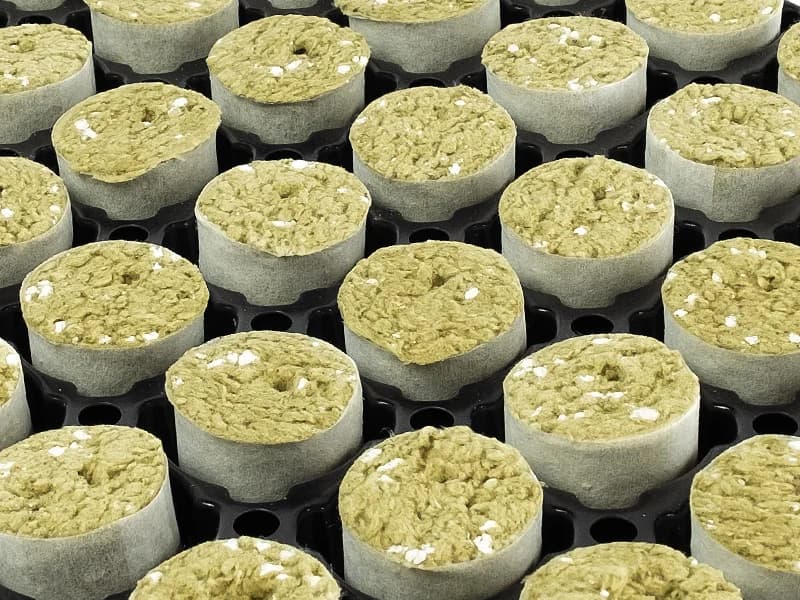
Rockwool gives precise control over water, air and nutrition and is clean and uniform. In return it requires buffering, accurate watering and responsible disposal.
Rockwool holds a lot of water, ideal for a constant moisture supply.
The open structure supplies oxygen to the roots.
A stable pH value that is easy to buffer.
No weeds, diseases or pests, so a clean start.
Uniform properties for predictable growing results.
The structure stimulates healthy, fast root development.
The investment is higher than for some alternatives.
Rockwool must be buffered to the correct pH before use.
Incorrect watering quickly upsets the water balance.
Optimal use requires experience with EC and pH.
Production requires high temperatures.
Responsible disposal requires recycling or reuse.
For professional growers the advantages carry weight: control, consistent quality and proven results make rockwool a common choice for propagation. The disadvantages are mainly the learning curve and the purchase cost.
The plugs have an Ellepot FP 12+ paper sleeve. Read about the materials used in paper pot rockwool plugs and the difference between the core and the sleeve.
For sowing and cuttings, explore our rockwool plugs in 84- or 104-cell trays. Compare plug sizes and box contents to choose the right version.
Getting started with the trays? Read our guide to using rockwool propagation plugs for practical information on propagation.
Paper Plug Tray 84 and 104: rockwool plugs with an Ellepot FP 12+ sleeve, supplied by the complete box.